5. März 2026
After Matter: A Gathering for Circular Un/making
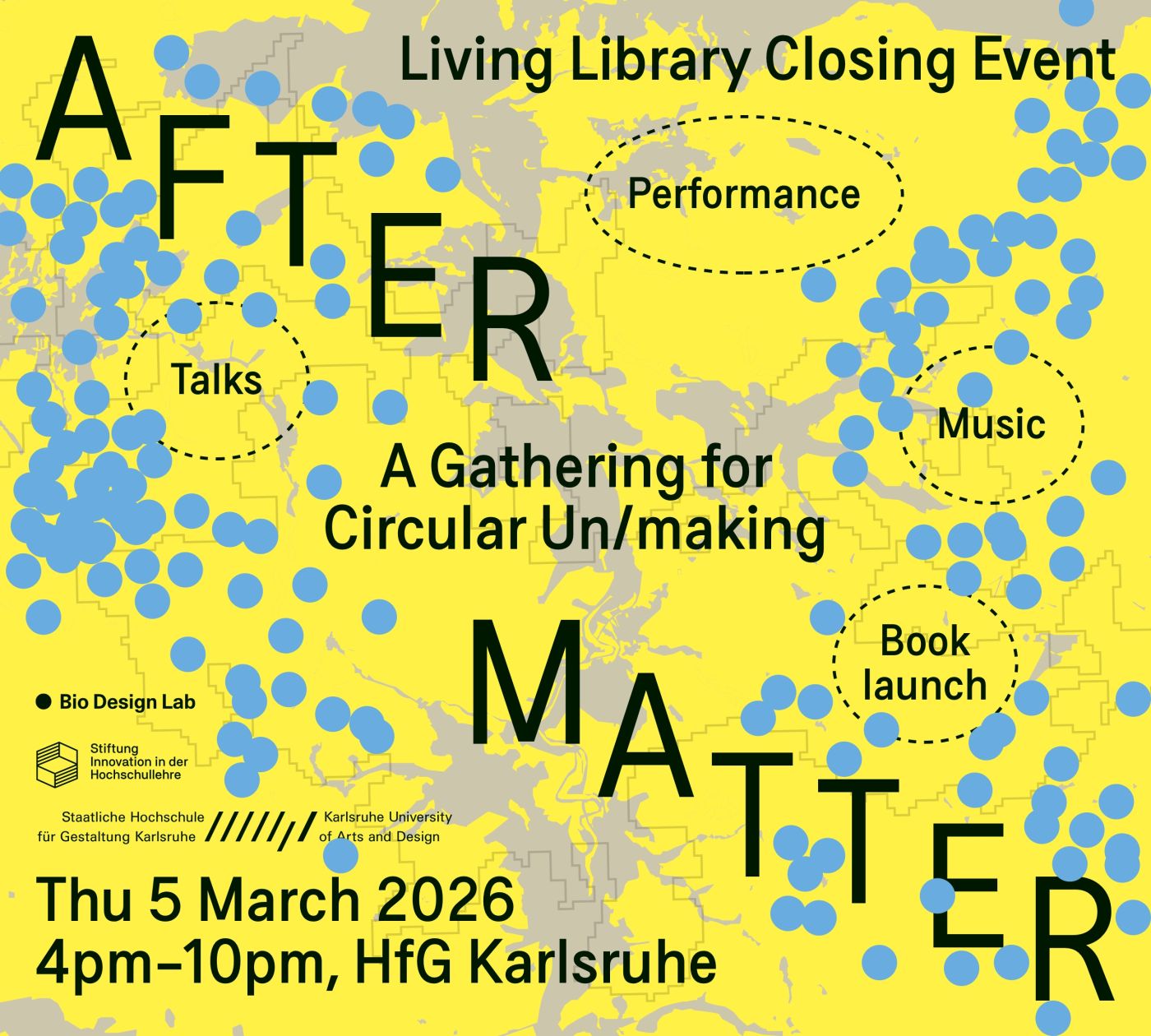
Wie lassen sich gesammeltes Wissen und Materialien in zirkuläre Praktiken überführen? Zum Abschluss der Projektlaufzeit lädt die Living Library zu einem Abend ein, an dem Gespräche, künstlerische Inputs und performative Gesten ineinandergreifen. Von Impulsvorträgen zu Afterlife und Urban Gardening über Soundperformances, bioregionales Dinner-Picknick und Kompost-Ritual: Seid dabei und stoßt mit uns auf das Ende und den Neuanfang an! Zum Abschluss feiern wir den offiziellen Launch der Publikation – begleitet von Drinks und DJs.
1. Feb. 2026
Tag der offenen Tür: Karten und Knoten
Wie funktioniert eigentlich das Erstellen von Karten? Welche Informationen braucht man dafür, welche nicht? Und was hat das mit Bioregionalität und Knotenkunde zu tun?
Findet es heraus bei unserem „Karten und Knoten“ Workshop: Hier zeigen wir euch spielerisch und experimentell, wie ihr ganz individuellen Karten eurer Umgebung erstellt. Dazu gibt’s Knüpf- und Knotentechniken – und ganz nebenbei auch noch ein paar Infos zum Living Library Projekt. Kommt vorbei!
Zeitraum: 12:00 – 15:00
Ort: Living Library, HfG EG
21. Nov. 2025
Mini-Kompost und Workshop über Bodenqualität (Englisch)
Der Workshop befasst sich mit Böden und ihrer wichtigen Rolle im Ökosystem und untersucht Möglichkeiten, einen gesunden Boden durch nachhaltige und innovative Gestaltung und künstlerische Praktiken zu erhalten.
Dabei lernen Teilnehmende u.a. wie man einen Wurm-Kompost baut und dessen nährstoffreichen Boden als wirksamen Pflanzendünger nutzt.
Der Workshop steht allen Interessierten offen und ist kostenfrei. Er findet auf Englisch statt. Die Anmeldung erfolgt unter livinglibrary@hfg-karlsruhe.de.
Um 18:00 Uhr, zum Abschluss des Workshops, sind Teilnehmende in das Kino Blauer Salon zur Vorführung des Dokumentarfilms "Taste of the Land" eingeladen.
Zudem wird am Samstag, 22.11.25 im ZKM eine geführte Tour zur Ausstellung „Assembling Grounds“ angeboten, bei welcher die Living Library mitwirkt.
2. Aug. 2025
«La Carte Locale» One-night-only KAMUNA Pop-up-Weinbar
Opening «La Carte Locale», a one-night-only wine bar hosted by the Living Library. Join for a glass of wine and an evening of mapping memories, personal stories, and knowledge of the local region around Karlsruhe.
2 August from 6 pm until 10 pm during the annual Karlsruher Museumsnacht.
Lorenzstraße 15 (HfG Karlsruhe)
26. Juli 2025
Eröffnung »404: Archiv nicht gefunden«
© ZKM | Centre for Art and Media Karlsruhe / Felix Grünschloß
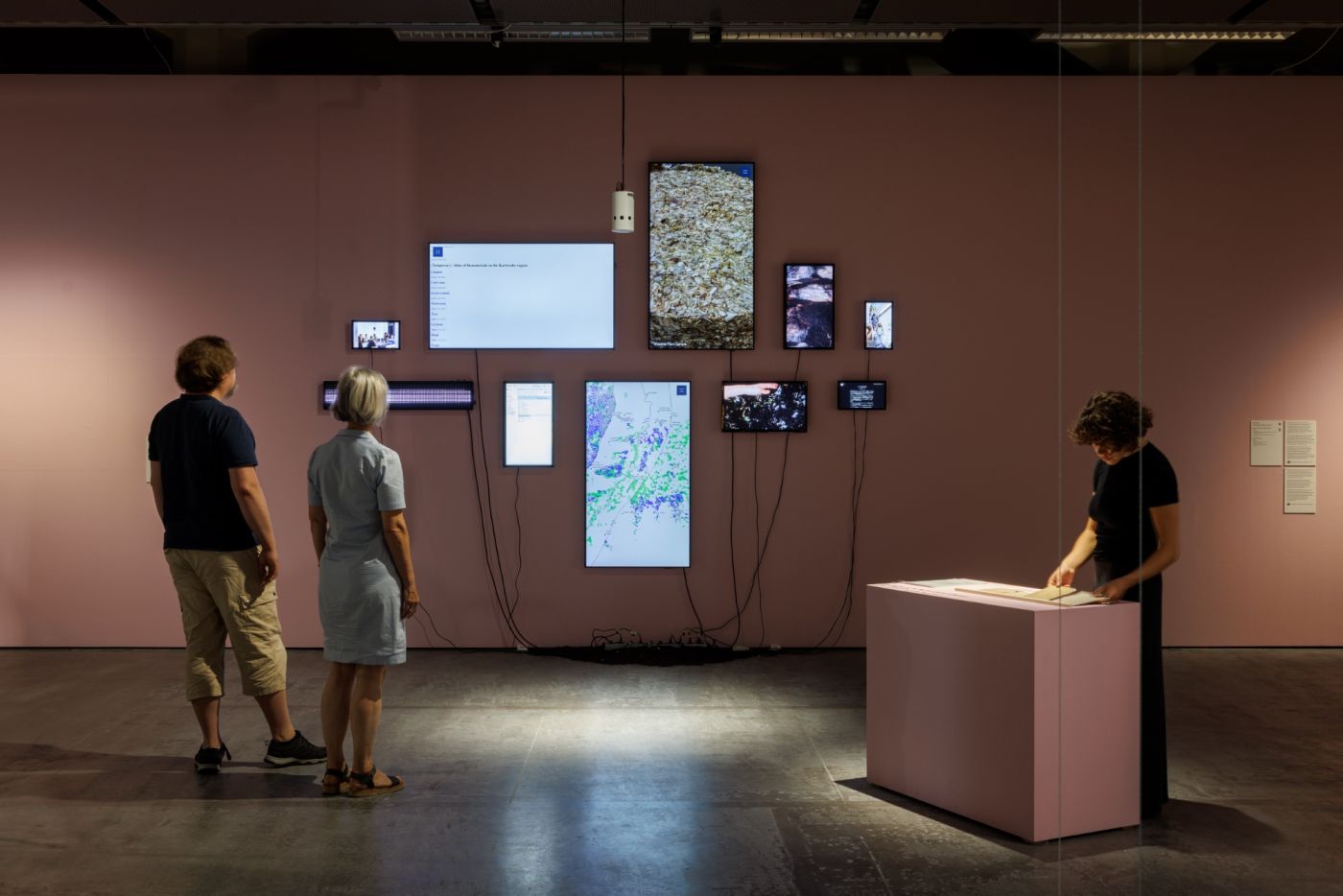
Mit der Installation 404: Archive Not Found (404: Archiv nicht gefunden) gibt das Bio Design Lab der HfG – Hochschule für Gestaltung Karlsruhe Einblicke in das Projekt Living Library (April 2024–März 2026). Im Zentrum steht eine besondere Materialbibliothek, die sich selbst zersetzt.
Wie können Materialien und Wissen vor Ort gesammelt, genutzt und wieder in den Kreislauf zurückgeführt werden? Um diese Frage zu beantworten, untersucht das Team des Bio Design Lab biologische Materialien, Handwerk und Wissen aus der Region im Umkreis von 50 Kilometern rund um Karlsruhe. Materialien wie Holz aus dem Schwarzwald oder Essensreste aus der Stadt sind Teil der Untersuchungen. Auch alte Handwerkstechniken, Geschichten aus der Region, die Landschaft und die Wirtschaft der Region werden betrachtet. Das Team sammelt über zwei Jahre Erfahrungen, die in Workshops sowie bei der Arbeit im Freien weiterentwickelt werden.
404: Archive Not Found zeigt dieses Projekt in Form einer Installation und thematisiert auch dessen digitale Entwicklung. Das Vorgehen des Projektteams wird beschrieben und Materialien, digitale Objekte und das Archiv der Living Library sind zu sehen. Die Installation wirft Fragen auf: Kann man Wissen und Materialien digital speichern? Was passiert damit, wenn die Menschen, die sie betreuen, nicht mehr da sind? Verrotten digitale Dateien mit der Zeit?
Kompost ist ein Symbol für das Projekt. Er zeigt: Alles verändert sich. Altes vergeht, Neues entsteht. So ist es auch mit dem Archiv: Es lebt und verändert sich. Die Erde wird zum letzten, bleibenden Speicher.
Ausgestellt im ZKM Zentrum für Kunst und Medien Karlsruhe 26. Juli 2025 – 8. Februar 2026
30. Juni 2025 & 1. Juli 2025
Über Tradition und Wandel – Hanf
© Bio Design Lab / Living Library
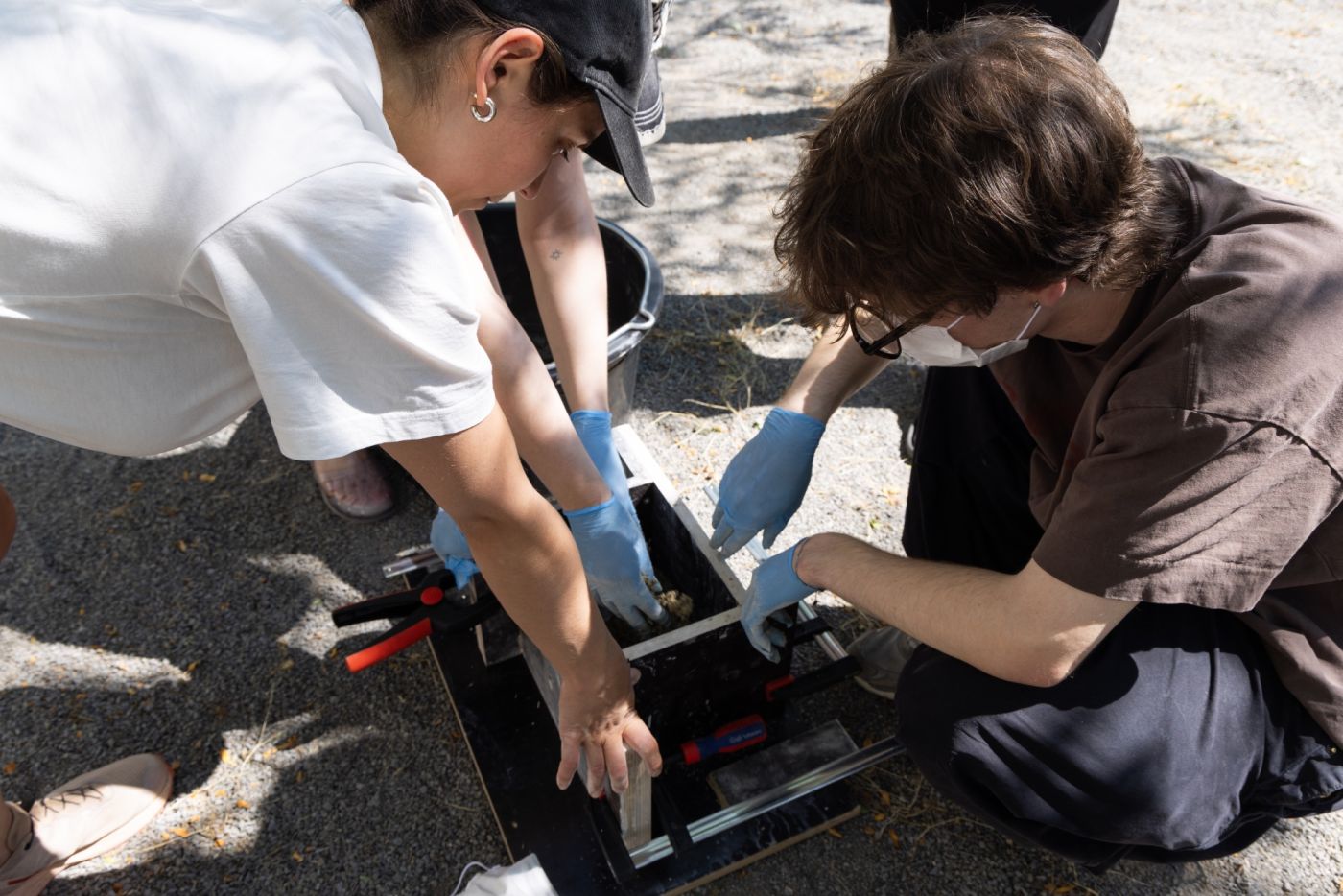
Zusammen mit den Produktdesignerinnen Freia Achenbach und Hannah Segerkrantz beschäftigten sich die Studierenden mit Hanfbeton und Seilherstellung. Nach Exkursionen zu einer Hanfverarbeitungsanlage und einem traditionellen Seilhersteller wurde im Workshop Hanf als ökologisch widerstandsfähiges Material hervorgehoben, das Bautechniken mit handwerklichen Verfahren verbindet.
2. Juni 2025 & 3. Juni 2025
Über Verdrängung und Anpassung – Invasive Pflanzen
© Bio Design Lab / Living Library
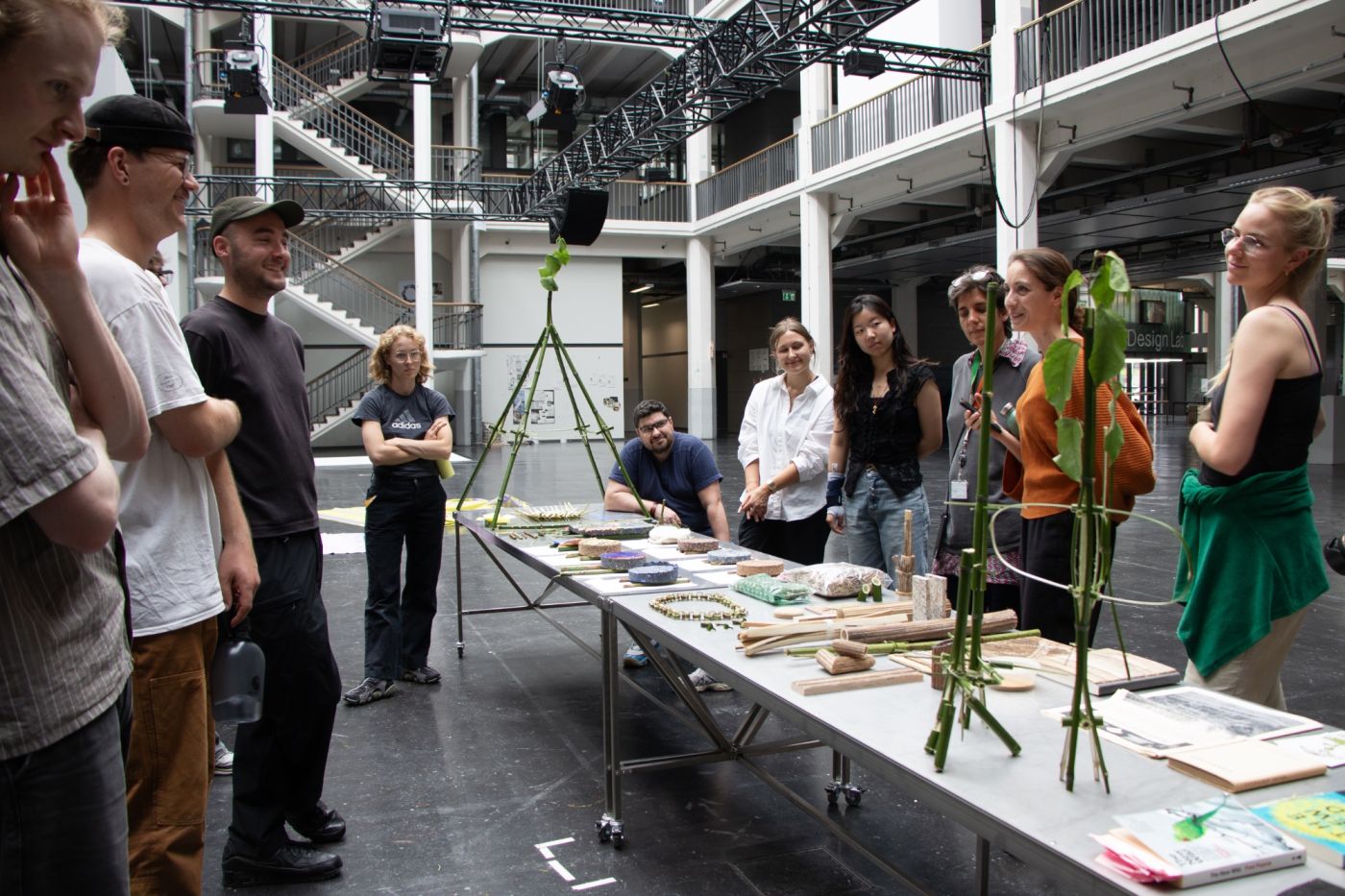
Die Medienkünstlerin Filipa César und das Designstudio Atelier Schaft stellten invasive Arten als umstrittene, aber fruchtbare Materialquellen vor. Während der Exkursion in den Wald mit einer lokalen Försterin wurden invasive Pflanzen unter fachkundiger Anleitung entfernt, während im Workshop – unter Verwendung von Bindemitteln und Pigmenten – herkömmliche Vorstellungen von Zugehörigkeit, Eigentum und Wert in der Ökologie hinterfragt wurden.
13. Mai 2025
Talk & Tour
Tour & Talk ist ein offenes Format für alle HfG Angehörigen und die Öffentlichkeit, bei dem die Räumlichkeiten der Living Library und die zugehörige Materialsammlung vorgestellt werden. Die Besucher werden in das Materialregalsystem eingeführt, das unter anderem von HfG-Studierenden während des vergangenen Wintersemesters entwickelt wurde. Abschließend folgt eine Frage- und Diskussionsrunde.
6. Mai 2025
Karten Café
In diesem Mini-Workshop für HfG-Mitarbeiter/innen und -Studierende erweitern wir die große Karte der Living Library um eure persönlichen Geschichten und euer lokales Wissen über Karlsruhe. Kommt für 5 Minuten vorbei oder setzt euch auf einen netten Gratis-Öko-Kaffee zu uns, alles ist willkommen!
5. Mai 2025 & 6. Mai 2025
Über Extraktion und Resilienz – Holz
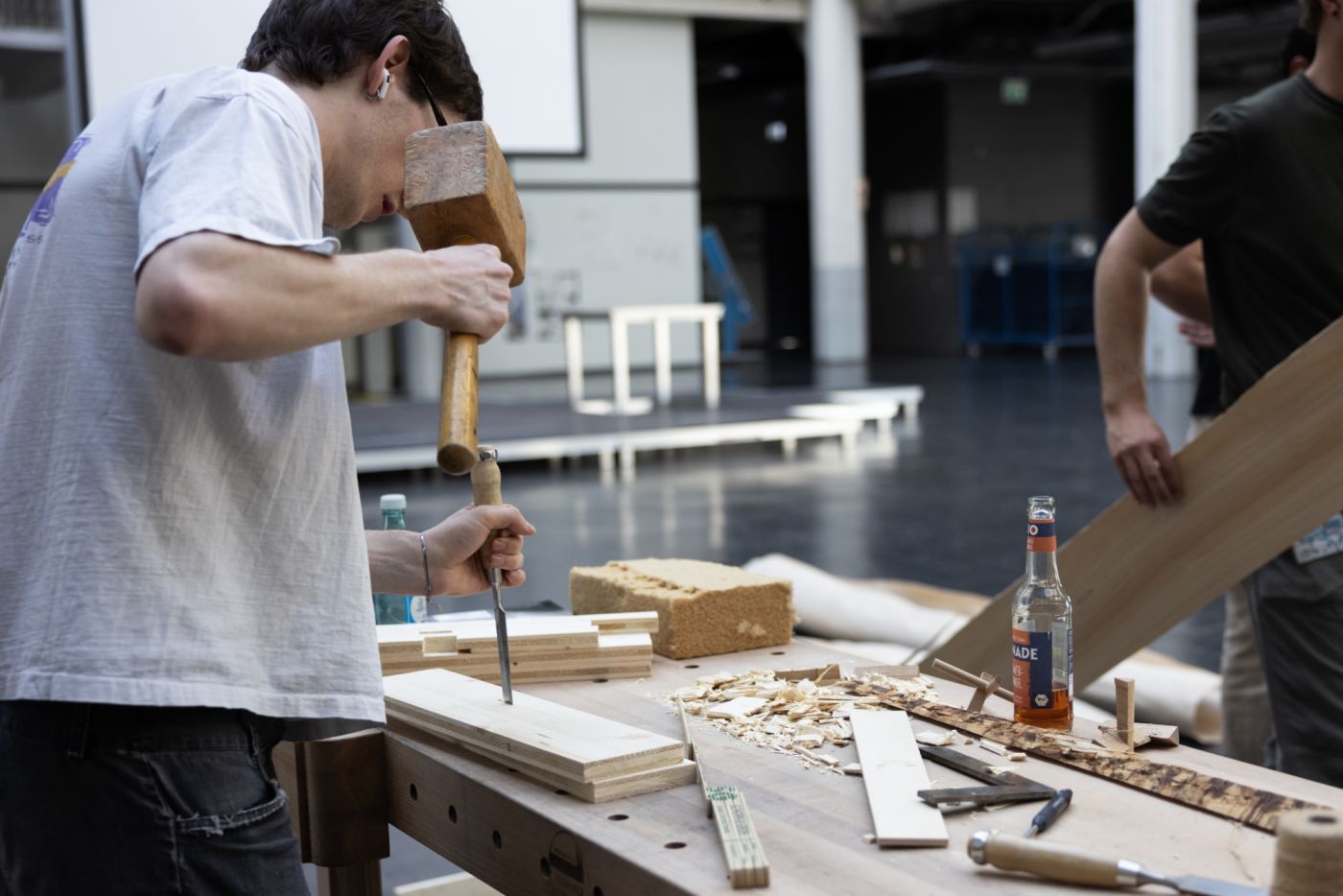
© Bio Design Lab / Living Library
Eine Exkursion unter der Leitung des Produktdesigners Simon Gehring und des Holzvermittlers Stefan Kudermann verband Waldökosysteme, Tischlereien und Holzfabriken miteinander. Der Workshop zum Thema Tischlerei betonte Holz als reaktionsfähiges Material und stellte die Frage, wie sich das Bauwesen von einer extraktivistischen zu einer dialogischen Praxis wandeln kann.
3. Feb. 2025 & 4. Feb. 2025
Über Erneuerung und Schnittstellen – Myzel
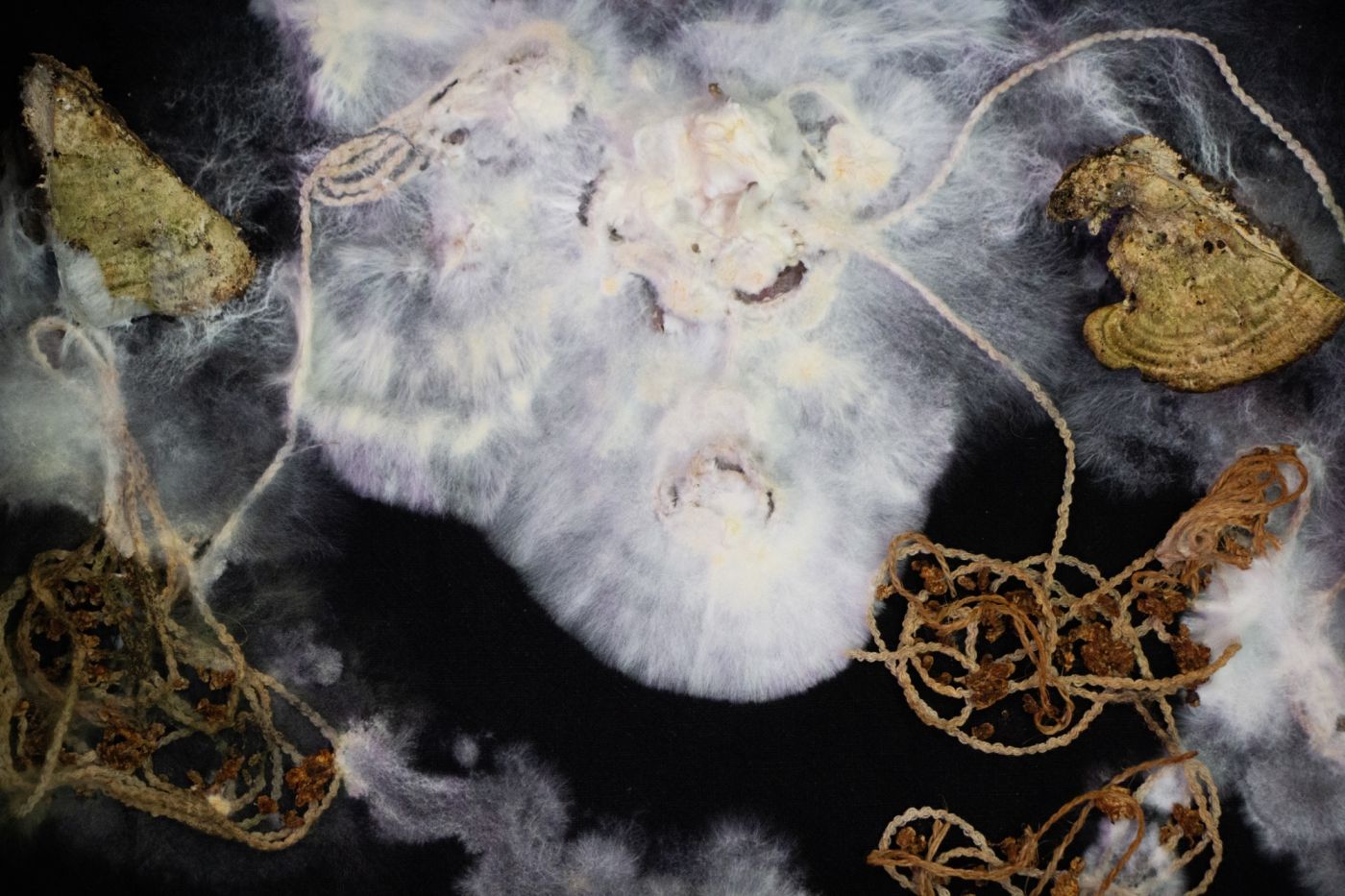
© Bio Design Lab / Living Library
Myzel wurde von den Designerinnen Nina Flaitz und Liene Kazaka sowohl als biologisches Netzwerk als auch als Material für Gestaltung vorgestellt. Nach einem Besuch im örtlichen Pilzherbarium und einer Pilzwanderung in den Rheinauen experimentierten die Studierenden im Labor mit dem Wachstum von Myzel und seinen textilen Eigenschaften.
13. Jan. 2025 & 14. Jan. 2025
Über Stoffwechsel und Kreisläufe – Lebensmittelabfälle
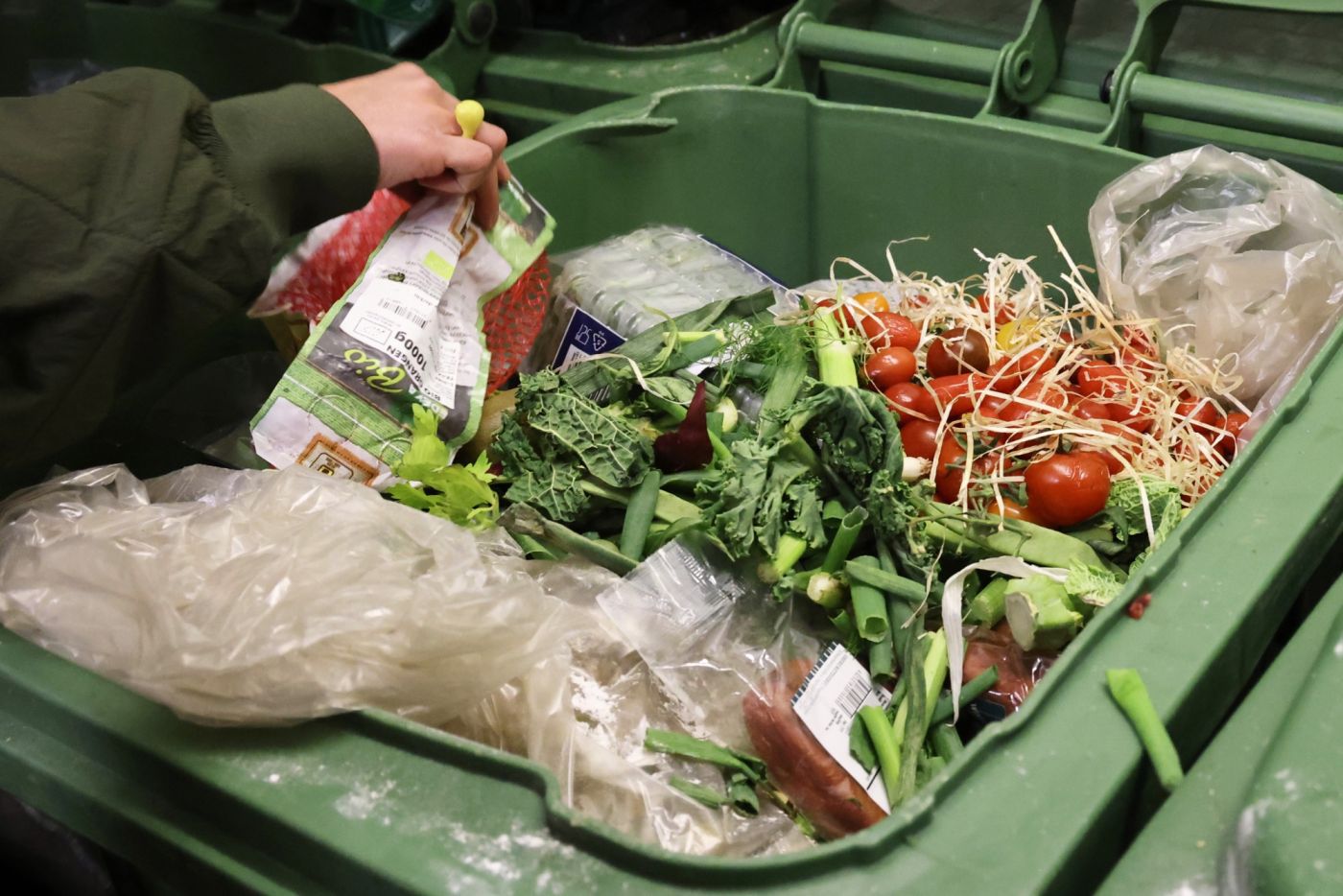
© Bio Design Lab / Living Library
Zusammen mit den Materialgestalterinnen Verena Brom und Loana Flores verfolgten die Studierenden lokale Abfälle und besuchten Lebensmittelproduzenten und Händler. Im Workshop verwandelten die Studierenden weggeworfene Materialien in Farbstoffe und Druckpasten und verbanden so Nachhaltigkeit mit Farbe, Handwerk und Storytelling.
2. Dez. 2024 & 3. Dez. 2024
Über Verflechtungen und Filzen – Wolle
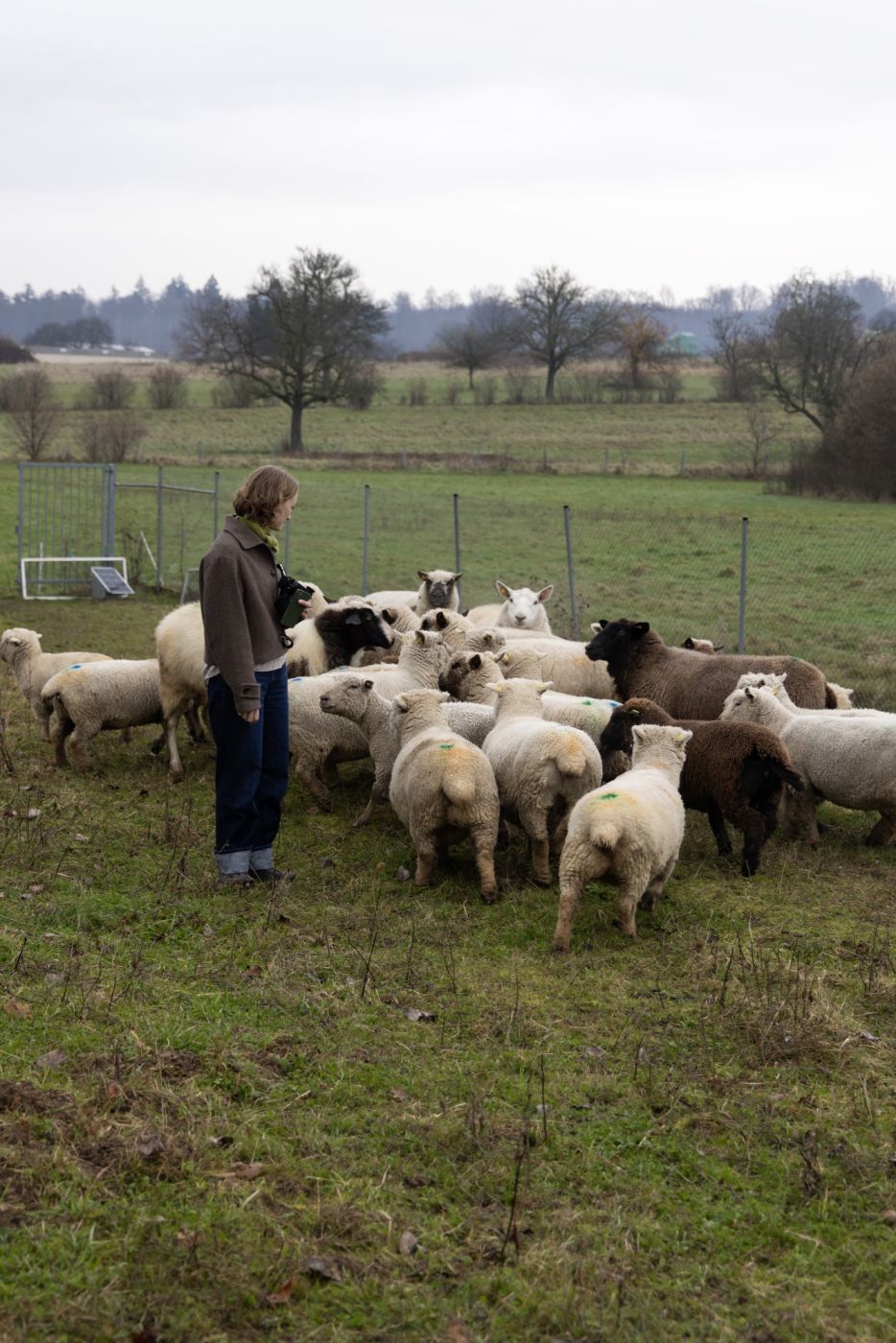
© Bio Design Lab / Living Library
Besuche auf Schafsfarmen und Verarbeitungsstätten wurden von den Designerinnen Carolin Schelkle und Nina Havermans geleitet. Der Workshop befasste sich mit Filzen und Rezepturen für Faser-Verbundstoffe und definierte Wolle neu als bioregionale Ressource mit sozialen und materiellen Verflechtungen.
4. Nov. 2024 & 5. Nov. 2024
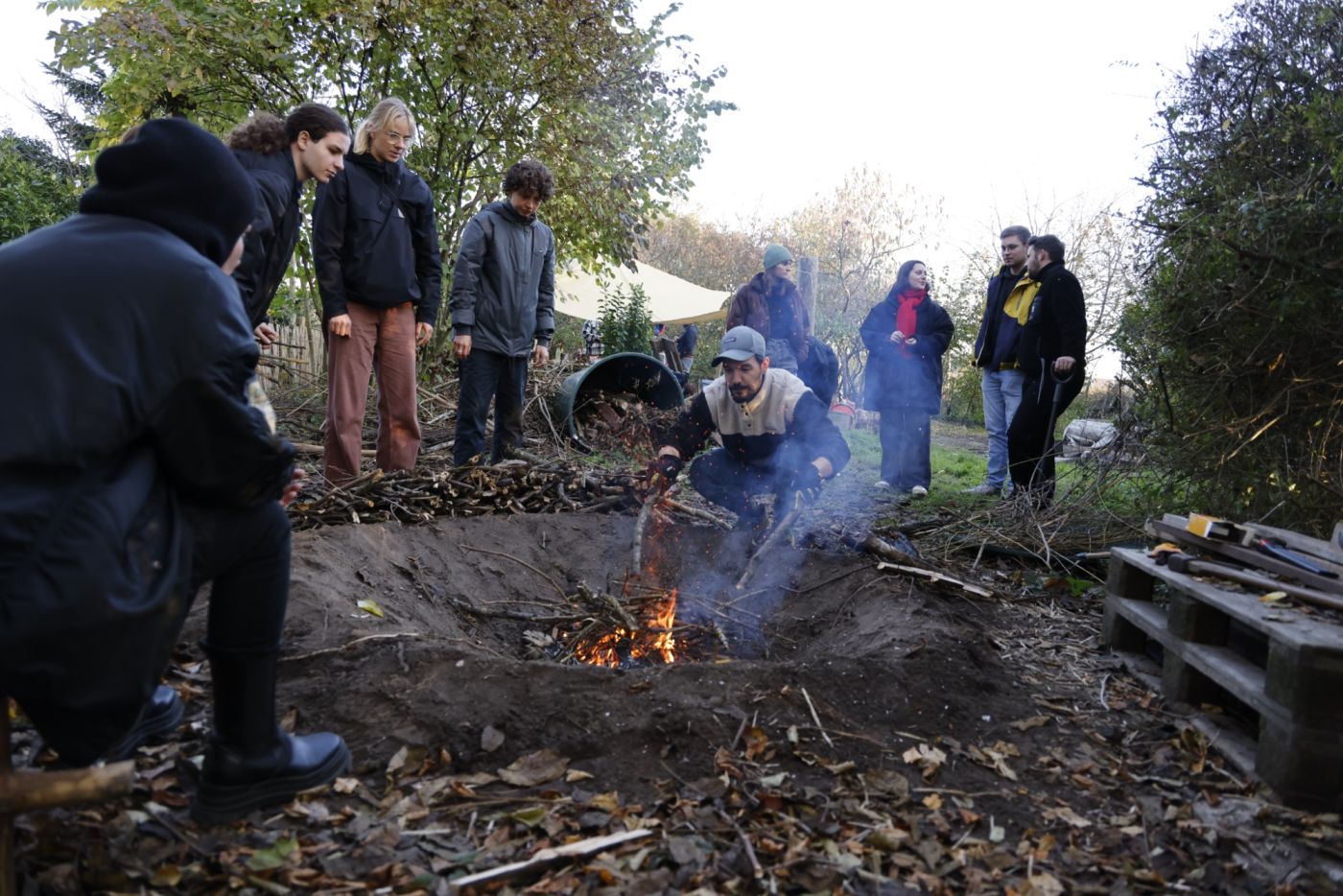
Über Transformationen und Metamorphosen – Kompost
© Bio Design Lab / Living Library
Mit Markus Bier und Vik Bayer/Michael Reindel (Compost Collective, Wien) wurde Kompostierung sowohl als ökologische Praxis als auch als spekulative Methode vermittelt. Die Aktivitäten reichten von der Herstellung von Biochar bis zum Bau von Komposthaufen, wobei auch über Transformationszyklen nachgedacht wurde. Zu den Exkursionen gehörten ein lokaler Schulgarten und die Kleingärten in Karlsruhe.
8. Okt. 2024
Vorstellung des Lehrprogramms Living Library
Das Lehrprogramm umfasste eine Reihe von zweitägigen Veranstaltungen, die jeweils eine Exkursion, ein Kolloquium und einen praktischen Workshop kombinierten. Diese Zusammenkünfte wurden zu Orten, an denen sich Wissen aus verschiedenen Bereichen kreuzte, Materialien mit den Orten und Gemeinschaften in Verbindung gebracht wurden, aus denen sie stammten, und Studierende mit Fachleuten zusammenkamen, die sowohl konzeptionelle Reflexion als auch praktische Experimente anleiten konnten. Durch die Zusammenführung lokaler und internationaler Stimmen förderte das Programm eine Kultur des gleichberechtigten Austauschs.
Am ersten Tag lag der Schwerpunkt auf der Erkundung. Die Teilnehmenden besuchten lokale Quellen für nachhaltige Materialien, beobachteten natürliche Kreisläufe und führten erste Experimente wie Faserextraktion, Verbundstoffbildung oder die Kultivierung von Biomaterialien durch. Die Kolloquien boten dann Raum, um Erkenntnisse aus den Exkursionen auszutauschen und sie in breitere Diskussionen über Biodesign und »Bioregioning«, neuen Materialismus oder »more than human« Narrative einzuordnen. Diese Sitzungen, die an der HfG Karlsruhe stattfanden und öffentlich online gestreamt wurden, öffneten den Austausch für ein breiteres Publikum und verknüpften Perspektiven von Studierenden, Praktizierenden und Forschenden miteinander.
Am zweiten Tag verlagerte sich der Schwerpunkt auf das Machen. Unter Anleitung von eingeladenen Praktizierenden verarbeiteten die Studierenden die während der Exkursionen gesammelten Materialien und arbeiteten direkt damit. In dieser Phase standen der Aufbau von Wissen und Fähigkeiten im Vordergrund, wobei gezeigt wurde, wie theoretische Forschung und ökologische Reflexion in die Praxis umgesetzt werden können. Durch die Auseinandersetzung mit den Materialien durch Berühren, Experimentieren und Iteration entdeckten die Studierenden sowohl das Potenzial als auch die Grenzen der lokalen Ressourcen – Erkenntnisse, die in die eigene unabhängige Praxis einfließen können.
8. Okt. 2024
O-Days: Einführung in die Living Library
Das Team beginnt den Workshop mit einer kurzen Einführung in das Projekt „Living Library“ und dessen Zusammenhang mit dem Bio Design Lab, das sich derzeit im Ufo-Raum befindet. Dabei wird gezeigt, welche Tools auf der Website angeboten werden und wie die Studierenden diese nutzen können, um die Umgebung zu erkunden. Darüber hinaus stellt das Team den neuen Raum der Living Library, ihr Lehrprogramm und die Anmeldemöglichkeiten für Studierende vor.
Die Studierenden erfahren mehr über die Materialbibliothek und das Regalsystem, indem sie eine kurze Einführung in einen Kompost-Prototyp erhalten und einige Materialeigenschaften kennenlernen, mit denen im Bio Design Lab gearbeitet werden kann. Der Workshop, der für maximal 15 Studierende geeignet ist, endet mit einer Gruppenaktivität, in der die Teilnehmenden detailliert lernen, wie man ein Biokunststoffmaterial herstellt.
20. Sept. 2024
Opening: Living Library / Common Grounds
Feiert mit uns die neuen Räumlichkeiten des Bio Design Labs: Ab dem Wintersemester steht das BDL im Glasrondell (EG, Haupteingang Lorenzstraße) mit einem Wetlab für steriles Arbeiten mit bio-basierten und lebendigen Materialien und einem offenem Drylab für kontaminiertes Experimentieren zur Verfügung!
Stoßt mit uns auf die Eröffnung der Living Library an! Bis März 2026 dient die zirkuläre Materialbibliothek und die dazugehörige Website als Experimentalzone, Lehrort und Dauerausstellung für lokale Materialien und Produktionsweisen in einem Radius von 50km. Die Artefakte aus regionalen Exkursionen und Workshops werden ab dem WS2024/25 hier zu sehen sein und live kompostiert.
Erkundet in der Ausstellungs-Sektion Common Grounds in der ZKM Ausstellung „Fellow Travellers“ bisherige Projekte des Bio Design Labs. Die Rückschau zeigt back-to-back mit dem ZKM Streuobstwiesenprojekt ausgewählte Arbeiten rund um more-than-human design und permazirkuläre künstlerische Praktiken.
Auf diese freudign Ereignisse möchten wir gerne mit euch anstoßen – am 20. September um 18:30 Uhr im EG der HfG, Lichthof 4 (ehemalige Location des BDL).
Es gibt Drinks und Music – und im Anschluss werden wir gemeinsam zur Eröffnung der Fellow Travellers Ausstellung um 19:30 Uhr ins ZKM rübergehen.
18. Juni 2024
Living Futures #2
Das Living Futures–Kolloquium ist eine Veranstaltungsreihe, die darauf abzielt, die interdisziplinäre Zusammenarbeit an der HfG zu fördern und die Bereiche Bio-Kunst und -Design, Neuer Materialismus, Posthumanismus, mehr als menschliche Narrative, Nachhaltigkeit und Lebenszyklen zu erforschen. Diese Reihe bringt Experten und Praktiker aus verschiedenen Bereichen wie Kunstgeschichte, Produktdesign, Kommunikationsdesign, Medienkunst und Fotografie zusammen, um die Schnittstellen ihrer Disziplinen mit innovativen Konzepten der zeitgenössischen Kunst und des Designs zu erforschen.
This time we’ll talk about permacircular museums, compost-core practices and the aliveness of materials with guests Stéphane Verlet-Bottéro and Eva-Maria Lopez.
3. Mai 2024
Living Futures #1
Das Living Futures–Kolloquium ist eine Veranstaltungsreihe, die darauf abzielt, die interdisziplinäre Zusammenarbeit an der HfG zu fördern und die Bereiche Bio-Kunst und -Design, Neuer Materialismus, Posthumanismus, mehr als menschliche Narrative, Nachhaltigkeit und Lebenszyklen zu erforschen. Diese Reihe bringt Experten und Praktiker aus verschiedenen Bereichen wie Kunstgeschichte, Produktdesign, Kommunikationsdesign, Medienkunst und Fotografie zusammen, um die Schnittstellen ihrer Disziplinen mit innovativen Konzepten der zeitgenössischen Kunst und des Designs zu erforschen.
2. Mai 2024
Stoffe wechseln: Zur Geschichte des »nachhaltigen Materials«
Franziska Müller-Reissmann, gelernte Restauratorin und langjährige Leiterin des Materialarchivs an der ZHDK gibt Einblicke in ihre Dissertationsforschung und deckt so manche Mythen und Geschichten um (nachhaltige) Materialien auf.
Aufgepasst – aufgrund von Vortragsüberschneidungen findet der Talk bereits um 17:30 Uhr auf der Lichtbrücke statt. Wer danach noch Input-hungrig ist, kann im Anschluss direkt weiter zur HfG/ZKM Gesprächsreihe mit Boris Buden im ZKM.