5 Mar 2026
After Matter: A Gathering for Circular Un/making
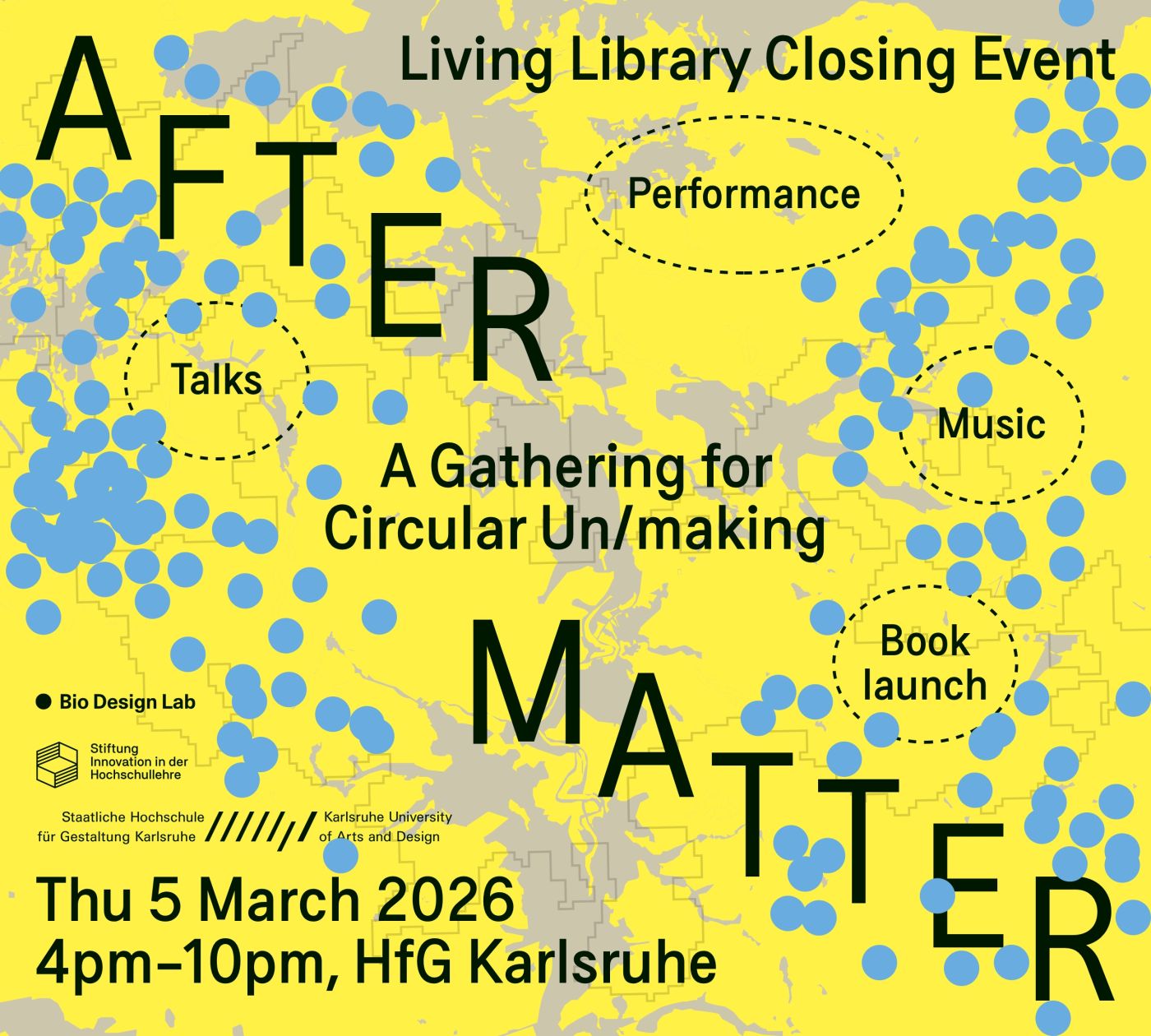
How can collected knowledge and materials be transformed into circular practices? At the end of the project period, the Living Library invites everyone to an evening of intertwined conversations, artistic inputs, and performative gestures. From impulse talks on afterlife and urban gardening to sound performances, a bioregional dinner picnic, and a compost ritual: join us and toast the end and the new beginning! We will conclude by celebrating the official launch of the publication—accompanied by drinks and DJs.
1 Feb 2026
Open Day: Maps and Knots
How does map creation actually work? What information is included, and what is left out? And what does this have to do with bioregioning and knotology?
Find out at our “Maps and Knots” workshop: Here we will show you in a playful and experimental way how to create your own individual maps of your surroundings. We will also teach you knotting and knot techniques—and, along the way, share some information about the Living Library project. Come and join us!
Time: 12:00 – 15:00
Location: Living Library, HfG Ground Floor
21 Nov 2025
Mini Composter and Soil Quality Workshop
As part of the research developed for the Living Library project, the first section will be dedicated to building a mini DIY composter, allowing participants to address composting from different perspectives, such as how to compost food and new organic materials.
Based on the Living Library's ongoing research on soil and the collection of different samples, some soil structures will be observed in connection with their regional areas and nutrient composition. As the ultimate goal, participants will learn how to reuse the soil compost as a sustainable plant fertiliser.
The workshop is open to a wide audience of adults, art and design students, researchers, or anyone simply curious. It is accessible via registration at livinglibrary@hfg-karlsruhe.de. The workshop will be held in English.
At 6 pm, participants will be invited to the Blaue Salon Cinema at HfG, for the screening of the Taste of the Land documentary by Adam Loften, Emmanuel Vaughan-Lee | USA 2024 | 70 min | DCP | Original version with English subtitles | with Kalyanee Mam
The two events complement each other and show how close our relationship to the soil is and what role it plays in the global ecosystem.
In connection with this workshop, on Saturday, 22nd November, the ZKM will organise a guided tour of the Assembling Grounds Exhibition, in which the Living Library is taking part.
2 Aug 2025
«La Carte Locale» One-night-only KAMUNA Pop-up-Weinbar
Opening «La Carte Locale», a one-night-only wine bar hosted by the Living Library. Join for a glass of wine and an evening of mapping memories, personal stories, and knowledge of the local region around Karlsruhe.
2 August from 6 pm until 10 pm during the annual Karlsruher Museumsnacht.
Lorenzstraße 15 (HfG Karlsruhe)
26 Jul 2025
Opening '404: Archive Not Found'
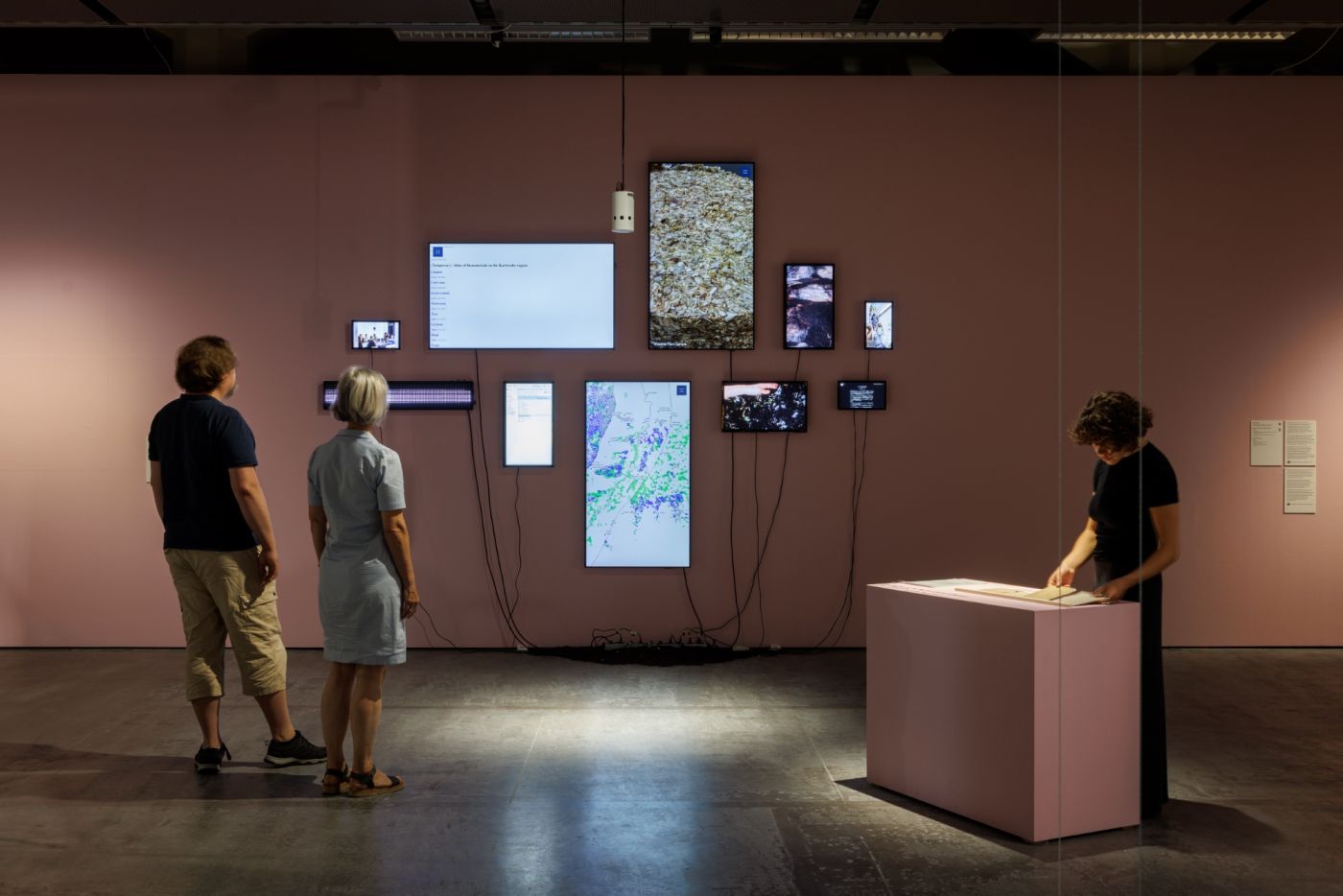
© ZKM | Centre for Art and Media Karlsruhe / Felix Grünschloß
With the installation 404: Archive Not Found, the Bio Design Lab of the HfG – Karlsruhe University of Arts and Design shares information about the Living Library project (April 2024–March 2026). The focus is on a special material library that decomposes itself.
How can materials and knowledge be collected locally, used, and then returned to the cycle? To answer this question, the Bio Design Lab team is studying biological materials, crafts, and knowledge from the region within 50 kilometres of Karlsruhe. The team is studying materials like wood from the Black Forest and food scraps from the city. They are also looking at old handicraft techniques, stories from the region, the region’s landscape, and its economy. The team aims to gather knowledge and experience over a period of two years. This experiential learning approach will be tested and improved through structured workshops and hands-on outdoor exercises.
404: Archive Not Found shows the project as an installation and also addresses its digital development. The project team’s approach is explained, and materials, digital objects, and the Living Library archive itself are displayed. The installation makes us ask: Can knowledge and materials be stored digitally? What happens to them when the people who care for them are no longer around? Do digital files decompose over time?
Compost is a symbol for the project. It shows: everything changes. Old things disappear, and new things emerge. The archive is always changing. The earth will become the final, permanent storage place.
On display at the ZKM Centre for Art and Media Karlsruhe 26 July 2025 – 8 February 2026
30 Jun 2025 & 1 Jul 2025
On tradition and transition - Hemp
© Bio Design Lab / Living Library
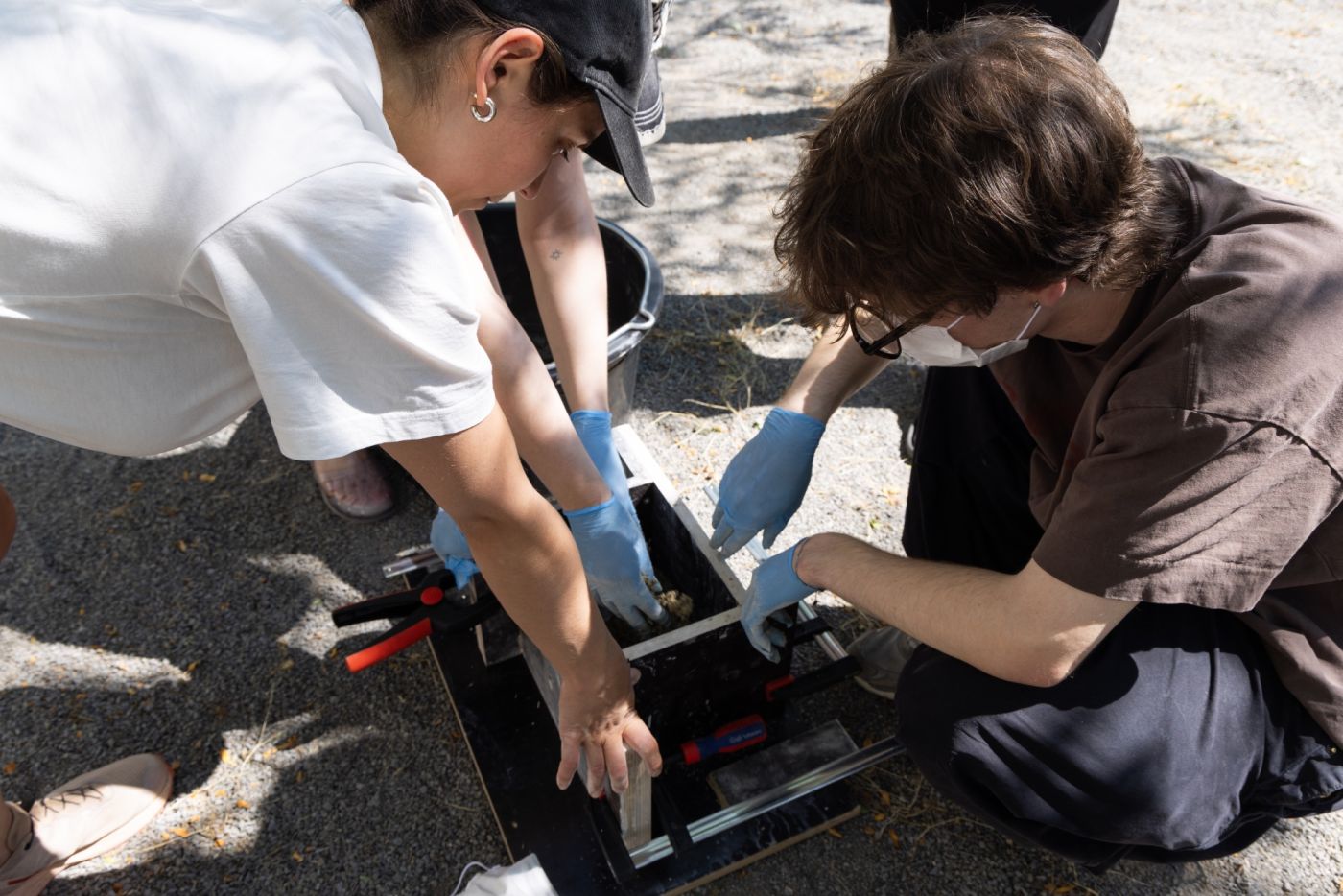
With designers Freia Achenbach and Hannah Segerkrantz, students explored hempcrete and rope-making. After field visits to a hemp processing site and a traditional ropemaker, the workshop highlighted hemp as a material of ecological resilience, combining building techniques with craft processes.
2 Jun 2025 & 3 Jun 2025
On displacement and adaptation - Invasive plants
© Bio Design Lab / Living Library
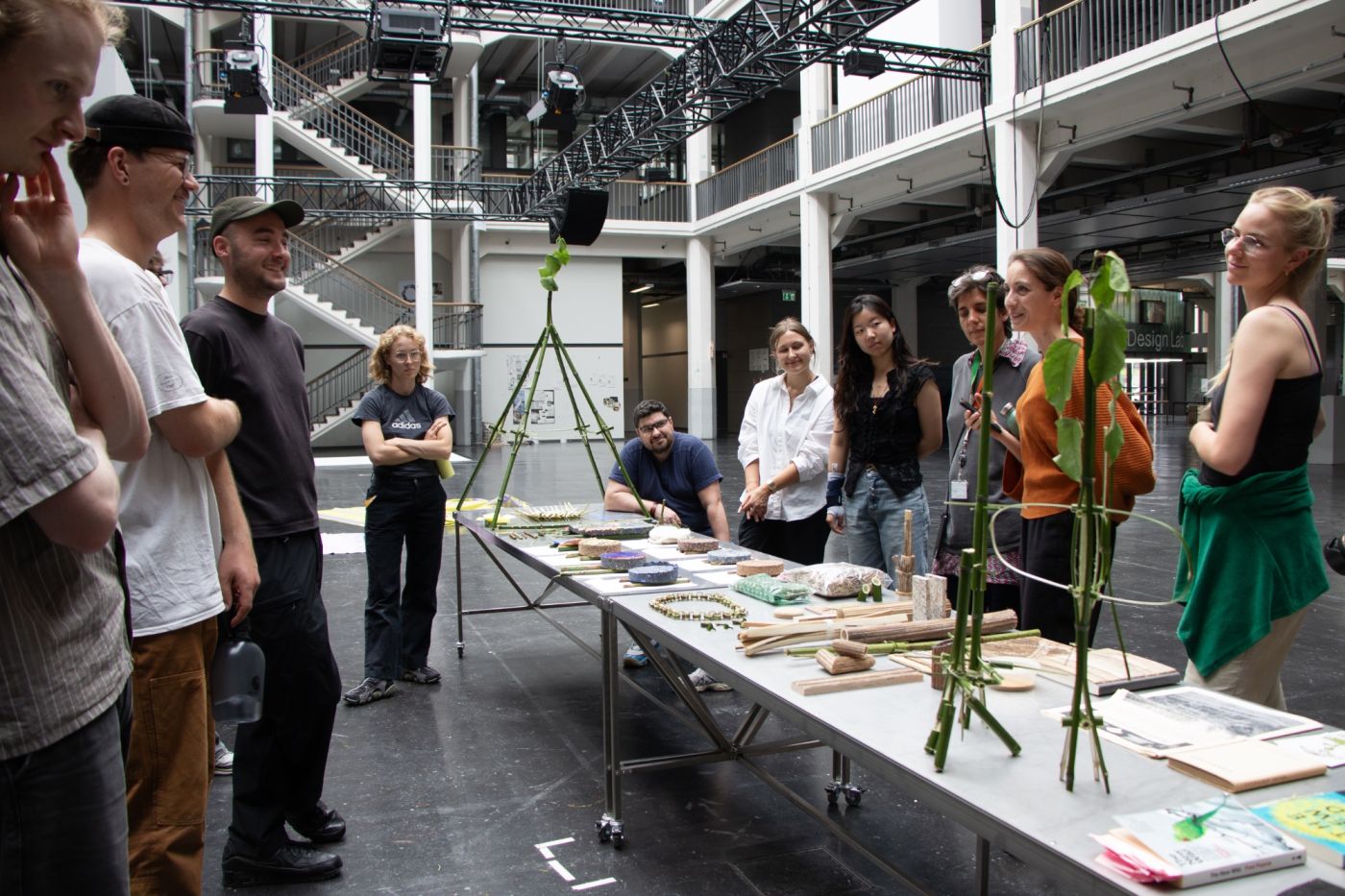
Media-artist Filipa César and the design studio Atelier Schaft introduced invasive species as controversial yet fertile material sources. During the field trip to the woods with a local forester, invasive plants were removed under expert supervision, while in the workshop - using composite binders and pigments - conventional notions of belonging, ownership, and value in ecology were challenged.
13 May 2025
Talk & Tour
Talk & Tour is an open format for all HfG members and the public during which the space of the Living Library and the associated material archive are presented. Visitors will be introduced to the material shelving system, which was also developed with the support of HfG students during the semester training programmes. There will be a question-and-answer session at the end.
6 May 2025
Maps Café
In this mini-workshop for HfG staff and students, we expand the large Living Library map to include your personal stories and local knowledge of Karlsruhe. Come join us for 5 minutes or sit down for a nice free eco-coffee, everything is welcome!
5 May 2025 & 6 May 2025
On extraction and resilience - Wood
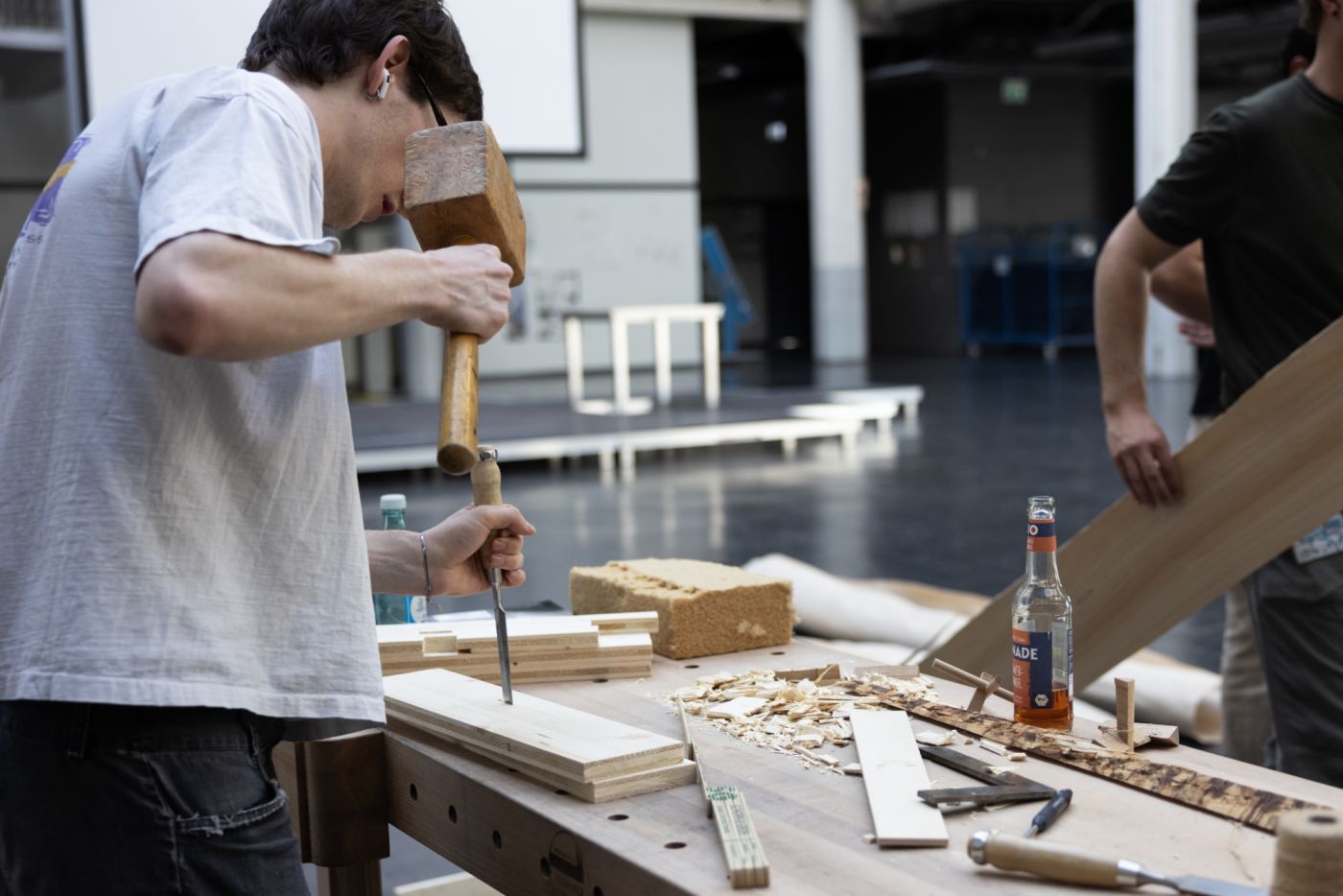
© Bio Design Lab / Living Library
A field trip led by product designer Simon Gehring and wood mediator Stefan Kudermann connected forest ecosystems, carpentry shops, and timber factories. The workshop on joinery emphasised wood as a responsive material, asking how construction can shift from extraction to dialogue.
3 Feb 2025 & 4 Feb 2025
On remediation and interfacing - Mycelium
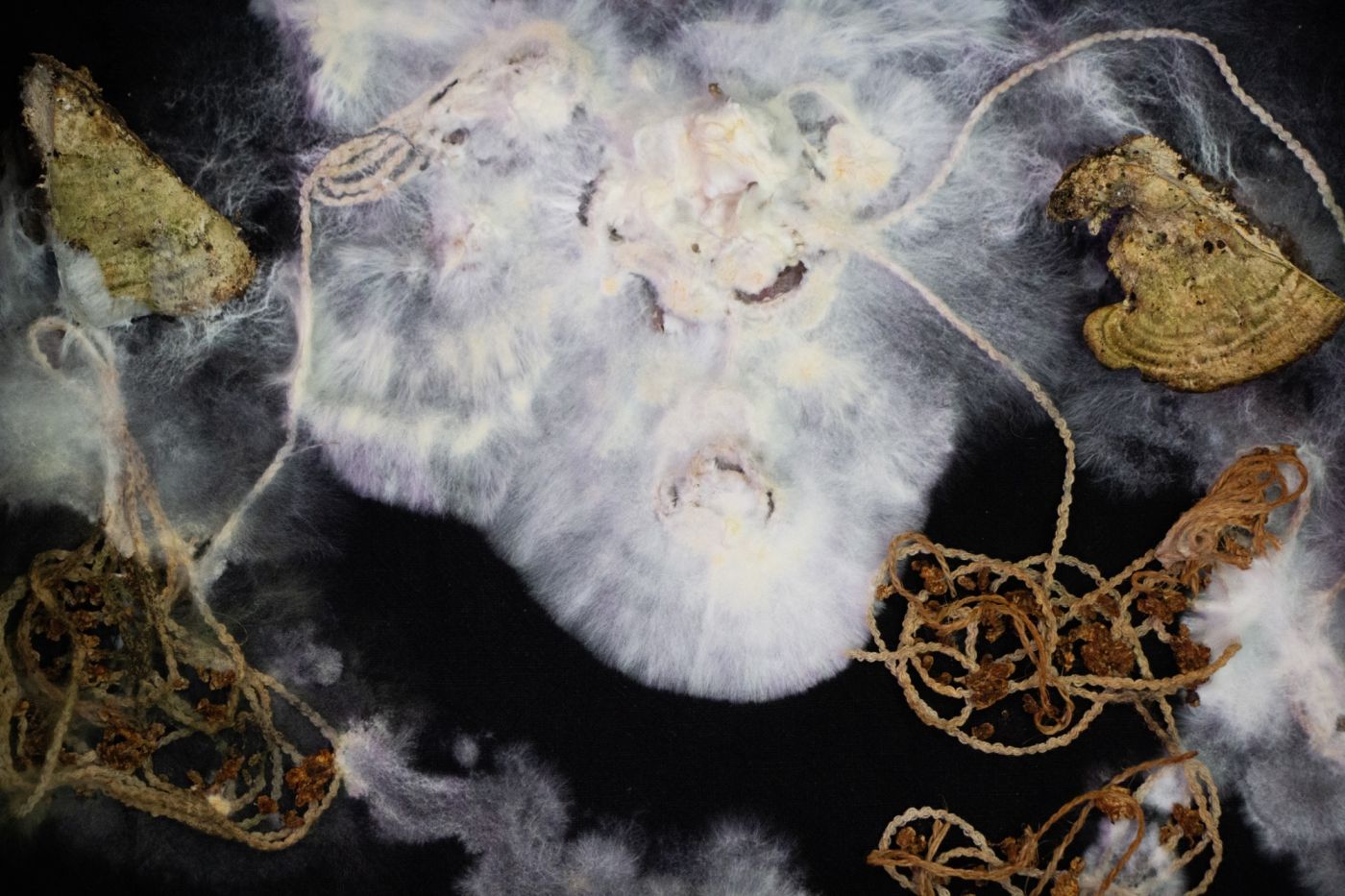
© Bio Design Lab / Living Library
Designers Nina Flaitz and Liene Kazaka introduced mycelium as both a biological network and a design material. After a visit to the local fungi herbarium and a mushroom hike in the Rhine floodplains, students experimented with mycelium growth and its textural properties in the lab.
13 Jan 2025 & 14 Jan 2025
On metabolisms and circulation - Food waste
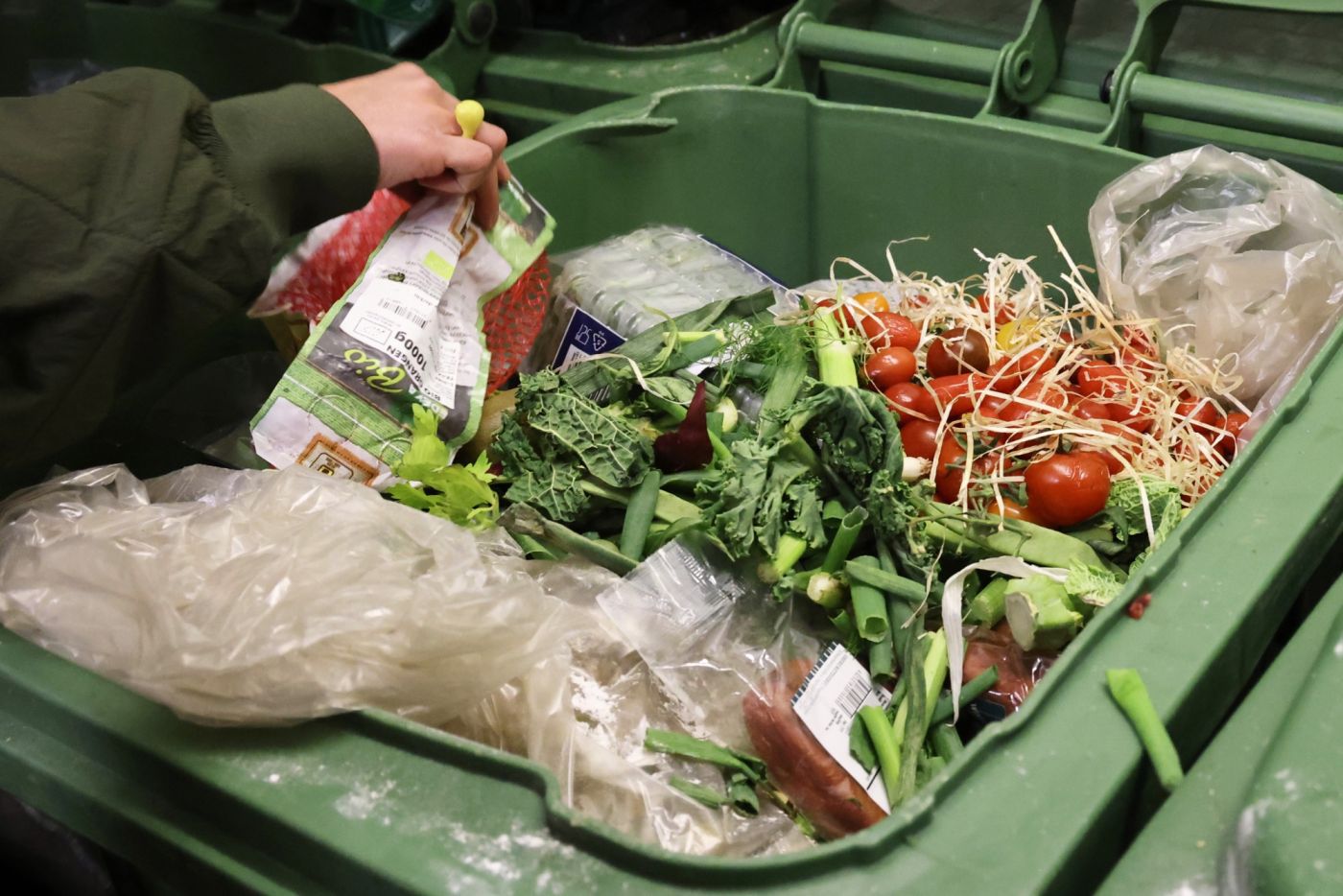
© Bio Design Lab / Living Library
With the material designers Verena Brom and Loana Flores, students traced local food waste streams, visiting producers and distributors. In the workshop, students transformed discarded matter into dyes and printing pastes, linking sustainability with colour, craft, and storytelling.
2 Dec 2024 & 3 Dec 2024
On entanglements and felting - Wool
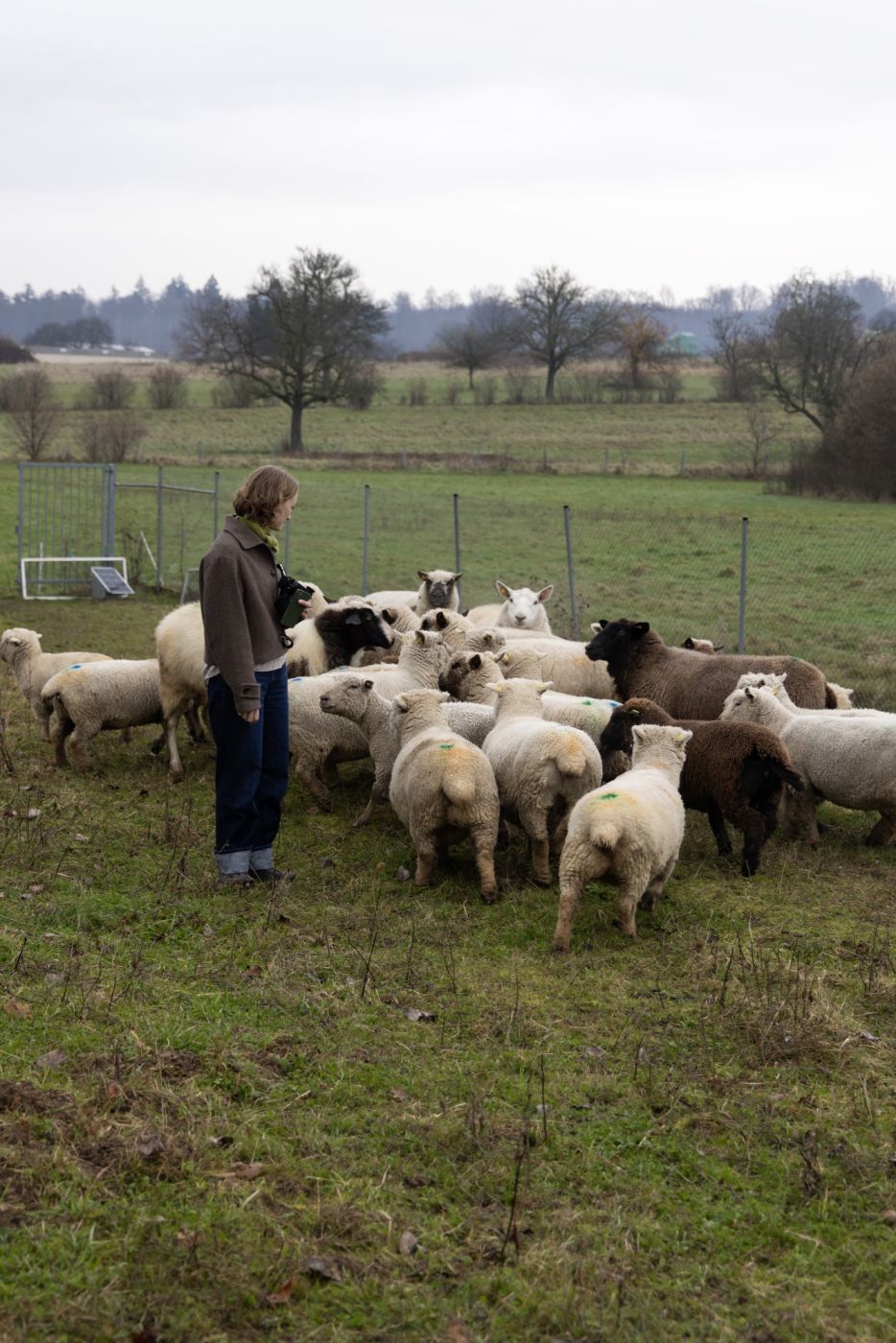
© Bio Design Lab / Living Library
Designers Carolin Schelkle and Nina Havermans guided visits to sheep farms and processing sites. The workshop explored felting and composite recipes, reframing wool as a bioregional resource with social as well as material entanglements.
4 Nov 2024 & 5 Nov 2024
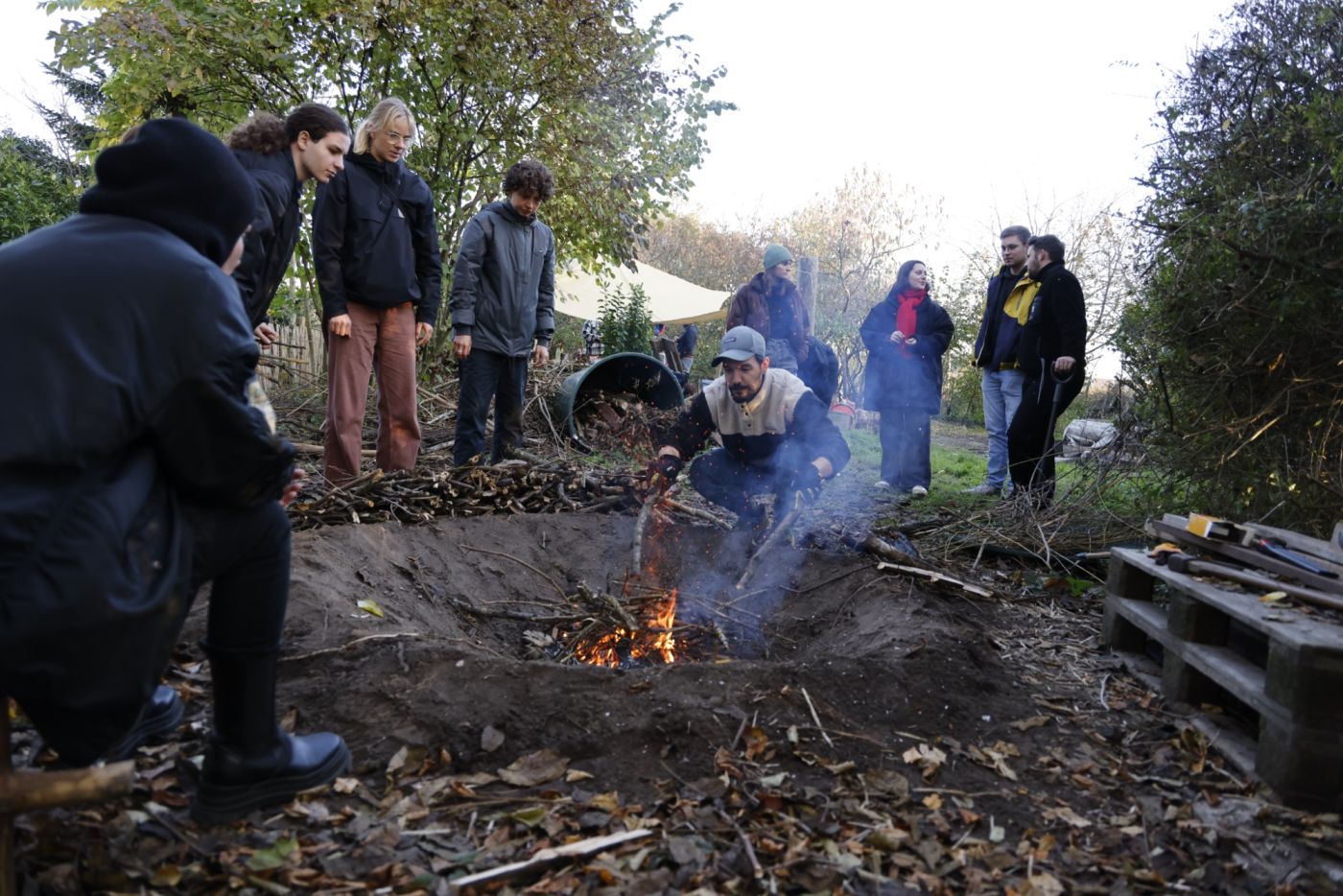
On transformations and metamorphoses - Compost
© Bio Design Lab / Living Library
With Markus Bier and Vik Bayer/Michael Reindel (Compost Collective, Vienna), students learned about composting as both ecological practice and speculative method. Activities ranged from making biochar to building compost heaps, while also reflecting on cycles of transformation. Field visits included a local school garden and Karlsruhe’s community gardens.
8 Oct 2024
Introducing the Living Library Education Programme
The education programme unfolded through a series of two-day events, each combining a field trip, a colloquium, and a hands-on workshop. These gatherings became spaces where knowledge from different domains intersected, linking materials to the locations and communities from which they emerged, while connecting students with practitioners who could guide both conceptual reflection and practical experimentation. By bringing together local and international voices, the programme cultivated a culture of equal exchange.
The first day centred on exploration. Participants visited local sources of sustainable materials, observed natural cycles, and engaged in early experiments such as fibre extraction, composite formation, or cultivating biomaterials. The colloquia then provided space to share insights from the excursions, situating them within broader discussions on biodesign and bioregioning, new materialism, or more-than-human narratives. Hosted at the HfG Karlsruhe and publicly streamed online, these sessions opened the exchange to a wider audience while weaving together perspectives from students, makers, and researchers.
The second day shifted the focus to making. Guided by invited practitioners, students processed and worked directly with the materials collected during the field trips. This phase emphasised knowledge and skill-building, showing how theoretical research and ecological reflection could be translated into practice. By engaging with materials through touch, experimentation, and iteration, students discovered both the potential and the limitations of local resources, insights they can carry on into their own independent practice.
8 Oct 2024
O-Days: Introduction to the Living Library
The team will start the workshop with a brief introduction about the Living Library project and how it relates to the Bio Design Lab, now located at the Ufo space, showing what tools they offer on their website and how students can use them to explore the local area. Furthermore, the team will introduce the Living Library's new space, its educational programme and how students can sign up for it.
Students will discover more about the material library display and the shelf system, through a quick introduction of a compost prototype and highlighting a few materials’ properties, which can be worked on in the Bio Design Lab. The workshop, suitable for a maximum of 15 students, will end with a group activity learning in detail how to create a bioplastic material.
20 Sept 2024
Opening: Living Library / Common Grounds
Celebrate the new space of the Bio Design Lab with us: Starting in the winter semester, the BDL will be available in the Glasrondell (ground floor, main entrance Lorenzstraße) with a wet lab for sterile work with bio-based and living materials and an open dry lab for contaminated experimentation!
Toast the opening of the Living Library with us! Until March 2026, the circular material library and the associated website will serve as an experimental zone, teaching location and permanent exhibition for local materials and production methods within a radius of 50 km. The artefacts from regional excursions and workshops will be on display here from WS2024/25 and will be composted live.
Explore previous projects of the Bio Design Lab in the exhibition section Common Grounds in the ZKM show “Fellow Travelers”. The retrospective presents selected works back-to-back with the ZKM Streuobstwiesenprojekt around more-than-human design and permacircular artistic practices.
We would like to toast these joyful events with you – on September 20 at 6:30 pm on the ground floor of the HfG, Lichthof 4 (former location of the BDL).
There will be drinks and music – and afterwards we will go over to the ZKM for the opening of the Fellow Travellers exhibition at 7:30 pm.
18 Jun 2024
Living Futures #2
The Living Futures–Colloquium is a series format aimed at fostering interdisciplinary collaboration in the HfG and exploration in the realms of bio art and design, new materialism, posthumanism, more-than-human narratives, sustainability, and life cycles. This series brings together experts and practitioners from diverse fields such as art history, product design, communication design, media art, and photography to delve into the intersections of their disciplines with cutting-edge concepts in contemporary art and design.
Dieses Mal sprechen wir mit unseren Gästen Stéphane Verlet-Bottéro und Eva-Maria Lopez über permazirkuläre Museen, Kompost-Core-Praktiken und die Lebendigkeit von Materialien.
3 May 2024
Living Futures #1
The Living Futures–Colloquium is a series format aimed at fostering interdisciplinary collaboration in the HfG and exploration in the realms of bio art and design, new materialism, posthumanism, more-than-human narratives, sustainability, and life cycles. This series brings together experts and practitioners from diverse fields such as art history, product design, communication design, media art, and photography to delve into the intersections of their disciplines with cutting-edge concepts in contemporary art and design.
2 May 2024
Stoffe wechseln: Zur Geschichte des ‘nachhaltigen Materials’ (German)
Franziska Müller-Reissmann, trained restorer and long-time head of the materials archive at the ZHDK, will provide insights into her dissertation research and uncover many myths and stories about (sustainable) materials.
Please note – due to lecture overlaps, the talk will take place at 17:30 on the Lichtbrücke/Reeling. If you are still hungry for input afterwards, you can continue directly to the HfG/ZKM talk series with Boris Buden at the ZKM.